



home
>
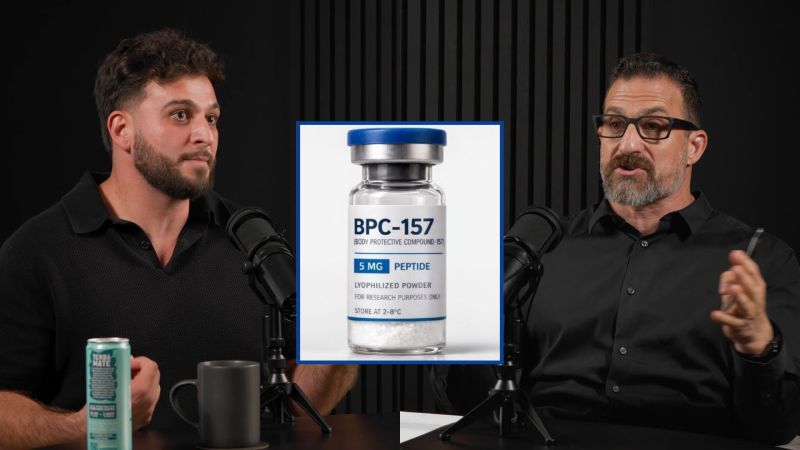
andrew huberman bpc-157 brand bpc 157 BPC-157: Hype and Reality with Dr. Abud Bakri blog-what-is-treatment-resistant-depression-product-15+
>
andrew huberman bpc-157 brand bpc 157 BPC-157: Hype and Reality with Dr. Abud Bakri blog-what-is-treatment-resistant-depression-product-15+


download picture
description
andrew huberman bpc-157 brand bpc 157 BPC-157: Hype and Reality with Dr. Abud Bakri blog-what-is-treatment-resistant-depression-product-15+

Shopping security
product description
Why choose thelockerguy wholesale?
andrew huberman bpc-157 brand bpc 157 BPC-157: Hype and Reality with Dr. Abud Bakri blog-what-is-treatment-resistant-depression-product-15+
Melanotan II Dosing Guide: Loading Dose, Maintenance & Side Effects (2026)
Each session is available for just $45, making it an accessible and impactful wellness treatment
blog-what-is-treatment-resistant-depression-product-15+
Injection:SubQ
Bakers Cyst Other Names Baker's Cyst Baker cyst Popliteal cyst Popliteal synovial cyst Synovial cyst of the popliteal space Background This page refers to a synovial or ganglion cyst of the knee, which when presenting posteriorly is referred to as a Baker's Cyst (BC) History Named after British surgeon William Morant Baker’s case series published in 1877 [1] First described by Robert Adams in 1840 [2] , and subsequently by Foucher in 1856 [3] Further characterized by Wilson in 1938 who dissected 30 knees, of which 58% had a direct connection with the knee joint [4] Epidemiology Found on 38% of knee MRIs on symptomatic patients [5] Found in 40-54% of adult knees based on cadaveric studies [6] Most commonly seen in adults between ages 35 and 70 (need citation) Pediatric Pathophysiology General A bakers cyst is a type of synovial cyst that forms between the semimembranosus and medial head of the gastroc It can be an incidental finding or the cause of the patients pain It is easily diagnosed on ultrasound or MRI Treatment is initially conservative but definitive care is surgical Anatomy of the Semimembranosus Gastrocnemius Bursa General Bursal communication between the Semimembranosus (SemiM) and medial head of the Gastrocnemius (Gastroc) There may be occasional involvement of the subgastrocnemius bursa [13] Case report of synvial cyst herniating out laterally through the Iliotibial Band [14] 1 way valve [15] Allows synovial fluid to pass into bursa where it is sequestered In flexion, valve is open allowing flow In extension, valve is closed due to muscle tension of SemiM and Gastroc Function May provide protective effect against hydraulic pressure from knee effusions Size of BC roughly correlates with size of knee effusion [16] Histology Cyst walls resemble synovial tissue with fibrosis suggesting chronic nonspecific inflammation [17] Cyst fluid is often thickened by the presence of fibrin Rauschnig et al found no difference in histopathology between symptomatic and asymptomatic knees Pediatric considerations Majority have no communication with the joint capsule and may arise spontaneously [18] When they do communicate with the joint, resemble those seen in adults Associated Pathology Associated with other knee disorders up to 94% of the time [5] Knee Osteoarthritis [19] Meniscus Injury [20] Knee Effusion Osteochondral Defect of the Knee Gout and other inflammatory arthropathies ACL Injury Failed Total Knee Arthroplasty Cysts can be loculated or very large [21] Thought to be due to macrophages digesting polyethylene May also suggests hardware loosening or wear Risk Factors History of trauma Gout Meniscus Injury Knee Osteoarthritis Differential Diagnosis Differential Diagnosis Knee Pain Fractures Dislocations & Subluxations Patellar Dislocation (and subluxation) Knee Dislocation Proximal Tibiofibular Joint Dislocation Muscle and Tendon Injuries Ligament Pathology Arthropathies Bursopathies Patellofemoral Pain Syndrome (PFPS)/ Anterior Knee Pain) Neuropathies Other Bakers Cyst (Popliteal Cyst) Patellar Contusion Pellegrini Stieda Syndrome Parameniscal Cyst Pediatric Considerations Patellar Apophysitis (Sinding-Larsen-Johnansson Disease) Patellar Pole Avulsion Fracture Tibial Tubercle Avulsion Fracture Tibial Tuberosity Apophysitis (Osgood Schalatters Disease) Proximal Tibial Metaphyseal Fracture Proximal Tibial Physeal Injury Clinical Features History Patients may report insidious, posterior knee pain Additionally fullness, achiness, mass, and stiffness The most common symptoms are swelling (76%), posterior aching (32%) [23] Pain with full or terminal knee extension Often have symptoms consistent with meniscal or chondral injuries Physical Exam: Physical Exam Knee Findings often consistent with meniscal or chondral injuries With large cysts, posteromedial fullness may be present but many smaller cysts are not palpable Special Tests Foucher Sign: Examine posterior mass in full knee extension and flexion, should be soft in flexion Homan Sign: Extend knee, passively dorsiflex ankle and squeeze calf Evaluation Radiographs Standard Knee Radiographs Screening tool Not typically useful for evaluating a bakers cyst Can detect other pathology associated with bakers cyst E.g.: Osteoarthritis, Gout, Osteochondral Defect Loose bodies may be seen within the bakers cyst Arthrography Previously gold standard for evaluation [25] Has fallen out of favor for MRI, US Ultrasound Advantages Cheap, lacks radiation, ease of use Disadvantages User dependent, cant evaluate all soft tissue injuries Findings Anechoic or hypoechoic, circumferential structure Lacks flow and doppler signal of vascular structures Accuracy [26] Sensitivity: 100% Specificity: 100% PPV: 100% NPV: 100% Accuracy: 100% MRI Gold standard for evaluating BC and other soft tissue structures Findings Appear as a water-intensity fluid collection (low signal intensity on T1, high signal intensity on T2-weighted images) [20] Description Most are small, unilocular but can also be septated or multiloculated Size, sites of extension, rupture can change appearance of fluid collection Loose bodies/debris can be present Classification No specific classification Important to characterize Communicating vs noncommunicating Loculated, multiloculated or septated Underlying etiology Management Nonoperative General Initial treatment of choice unless complications Important to target the underlying disorder Physical Therapy Maintain range of motion and knee flexibility Intra-articular Corticosteroid Injection Intra-articular has been found to decrease size, symptoms of cyst [28] Bakers Cyst Aspiration and Injection This is particularly valuable in the uncommon noncommunicating, multiloculated or septated cyst Operative Indications Failure of conservative therapy Complicated including infection, neurovascular insult Technique Arthroscopic debridement Arthroscopic cyst decompression or excision Less commonly, open cyst excision Correction of intra-articular pathology Rehab and Return to Play Rehabilitation Rehab should begin early and include [29] Knee and core stabilizer strength Flexibility Functional independence Return to Play General RTP guidelines [30] Confirm anatomical and functional healing Restoration of sport-specific skills Psychosocial readiness Prognosis and Complications Prognosis General Prognosis is generally favorable with appropriate conservative or minimally invasive treatment Conservative Surgical Response to surgical excision seems to correlate with ability to correct intra-articular pathology Rauschning et al: 46 surgical excisions, 63% recurred, 33% had wound complications or pseudothrombophlebitis after [33] Rupp et al: Arthroscopic treatment for 16 intra-articular disorders, 11 cysts persisted of which 2 became larger at 1 year postop [34] Chondral lesions appeared to be most important prognostic factor, all patients had outerbridge III or IV lesions Complications Infection Case reports related to Septic Arthritis [35] Rupture Neurovascular compression Thrombophlebitis Acute Compartment Syndrome Compressive Neuropathies of the Tibial Nerve, Peroneal Nerve have been reported [36] Deep Vein Thrombosis Compression of Popliteal Artery or Popliteal Vein See Also Internal External Sports Medicine Review Knee Pain: References ↑ Baker WM
andrew huberman bpc-157 brand bpc 157 BPC-157: Hype and Reality with Dr. Abud Bakri blog-what-is-treatment-resistant-depression-product-15+
Item no
:
63013190475
US$ 26.36
Pay in 4 interest-free payments of $6.59 Learn more
Min. order:
1piece
Shipping Estimate
USA
- USA
- CAN
- USA
- CAN
Ships within 48 hours · Estimated delivery Oct 31 - Nov 5
US$40
Get nowSign up to your membership to get coupons up to
15%
Get nowOpportunity to enjoy order discount up to 15% off
Please add the products
Shipping Notes
- Free Standard Shipping on $100+ Orders to the USA.
- Except Preorder products are shipped in 48 hours.
- Delivery to the USA:
- Standard Shipping : 3-10 business days
- If time is of the essence, please consider selecting expedited delivery for faster service.
Exchange/Return Notes
- We offer a 30-day return/exchange service after receiving.
- Final sale items are not eligible for returns or exchanges.
- To process your return/exchange, please contact us at [email protected]
- Please click here for more details>>> Return & Exchange Policy
Frequently Asked Questions for andrew huberman bpc-157 brand bpc 157 BPC-157: Hype and Reality with Dr. Abud Bakri blog-what-is-treatment-resistant-depression-product-15+
What should I do when product information is unclear or conflicting?
Ask the seller a focused question about the conflicting detail. Treat an unanswered question as uncertainty rather than implied confirmation.
How can I get useful help from the seller about a product or order?
Avoid opening unnecessary duplicate requests that could split the conversation. Use precise details about the actual purchase instead of assumptions about the cause.
What should I do if checkout changes my selected option unexpectedly?
Compare the checkout entry with the option you intended to choose. Review the product reference alongside its visible option name.
You may also like
Brighten Skin Fast: Glutathione 2000mg
US$ 26.52
60 Vegan Capsules for Skin Whitening
US$ 28.71
UAE Beau de Bellus
US$ 23.68
Bangladesh Beau de Bellus
US$ 29.61
Mauritius Beau de Bellus
US$ 28.84
Suriname Beau de Bellus
US$ 27.44
Trinidad and Tobago Beau de Bellus
US$ 26.85
Beau De Bellus
US$ 25.57